
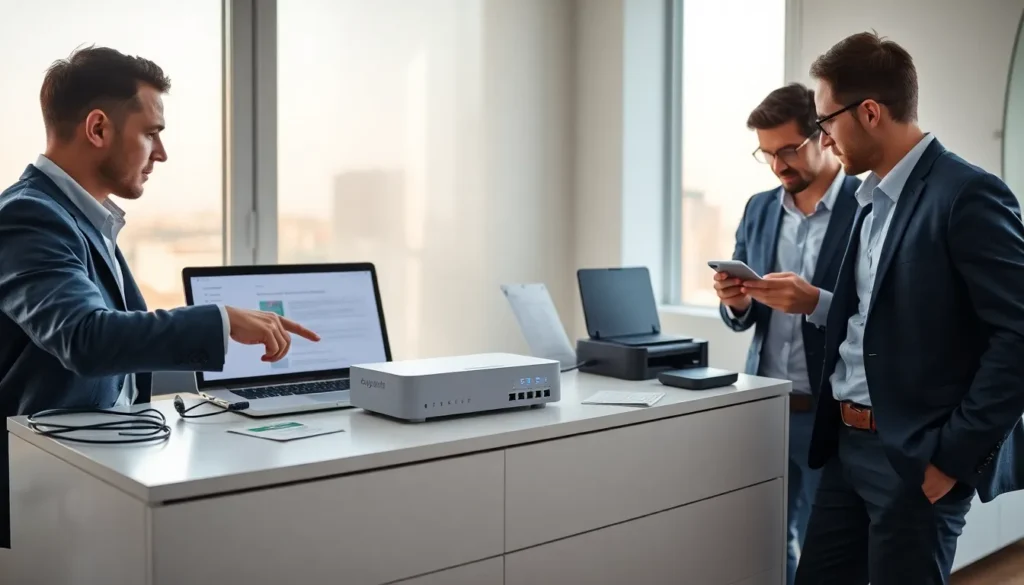

Ezy8066 is a compact network device for home and small office use. This guide explains what ezy8066 does, who uses it, and how to get started. It presents clear steps and practical tips for setup, troubleshooting, and comparison.
Table of Contents
ToggleKey Takeaways
- Ezy8066 is a compact, low‑power router that provides dual‑band Wi‑Fi and four LAN ports for simple home and small office networking.
- Set up ezy8066 by connecting the WAN to your modem, logging into the web admin or app, running the setup wizard, and changing the default admin and Wi‑Fi passwords.
- Troubleshoot common issues by checking modem links and cables, testing speeds on a wired client, updating firmware, and using factory reset or recovery mode if needed.
- Improve reliability and speed by placing the unit centrally and high, using wired connections for fixed devices, enabling WPA2, disabling WPS, and scheduling quarterly firmware checks.
- Choose ezy8066 when you want low cost and easy management for basic networking, but pick a higher‑tier or enterprise device for advanced VPN, deep QoS, multi‑WAN, or large client loads.
What Ezy8066 Is And Who It’s For
Ezy8066 is a small router-like device that provides wired and wireless connectivity. It serves users who need simple local networking and basic internet sharing. Small offices, remote workers, and home users often choose ezy8066 when they want low-cost, easy-to-manage equipment. The device supports standard network protocols and common security settings. It targets people who want quick setup and reliable basic performance. Technicians may also use ezy8066 as a test unit or a temporary hotspot.
Key Features And Technical Specs
Ezy8066 ships with dual-band Wi-Fi, four LAN ports, one WAN port, and USB for storage or printing. The unit uses a quad-core processor and 256 MB of RAM. It supports WPA2 security and basic guest network features. The device handles up to 50 simultaneous clients under normal conditions. Ezy8066 includes a web admin page and a simple mobile app for basic control. The unit supports IPv4 and limited IPv6 features. Power consumption stays low at under 10 watts. The build uses common chipsets and standard antennas. Users can expect stable performance for everyday tasks like web browsing, video calls, and file sharing.
How To Set Up Ezy8066 Step By Step
Unbox ezy8066 and plug the power adapter into the device. Connect the WAN port to the modem with an Ethernet cable. Power on ezy8066 and wait for the LED to show a steady status. Connect a laptop to a LAN port or join the default Wi‑Fi network. Open a browser and go to the device IP address shown on the quick start card. Log in with the default username and password. Run the setup wizard and select the internet type. Enter ISP credentials if the ISP requires them. Set the Wi‑Fi name and password. Save the settings and reboot the device if prompted. Confirm internet access on a client device. If the user needs advanced settings, they can access the advanced tab in the web admin.
Common Problems And Troubleshooting Tips
Ezy8066 may show no internet when the modem lacks a link. Users should check the modem and cable first. If Wi‑Fi drops, move the device away from large metal objects and microwaves. If clients cannot connect, the user should check the Wi‑Fi password and network band. Slow speeds often result from ISP limits or congestion. Run a speed test on a wired client to isolate wireless issues. If the admin page is unreachable, verify the client IP and device IP. Clear the browser cache or try a different browser. If ports do not pass traffic, inspect firewall and NAT rules. Use the device log to find repeated errors. If firmware is out of date, update it using the official file. If resets fail, perform a factory reset and reconfigure the device.
Practical Use Cases And Best Practices
Ezy8066 suits guest Wi‑Fi at small cafes and meeting rooms. It serves as a simple VPN endpoint for remote access when paired with compatible software. Teachers can use ezy8066 in classrooms for quick local file sharing. Home users can isolate smart devices on a guest VLAN to increase security. Admins should change default passwords during the first setup. Users should enable WPA2 encryption and disable WPS if it is present. Schedule firmware checks once per quarter and keep a backup of the current configuration. Place ezy8066 high and central to improve coverage. Use wired connections for fixed devices like printers and NAS for better performance.
How Ezy8066 Compares To Alternatives
Ezy8066 costs less than many business-grade routers. It offers simpler features than high-end models. For users who want advanced VPN, deep QoS, or multi‑WAN, competitors may offer more. Ezy8066 wins on ease of use and price. It loses on advanced throughput and large client counts. Compared to mesh systems, ezy8066 requires manual placement for best coverage. Compared to enterprise devices, ezy8066 lacks centralized management. Buyers should match needs to features. If the user needs simple home networking, ezy8066 can serve well. If the user needs heavy traffic handling, choose a higher-tier model.
Where To Get Support And Additional Resources
Ezy8066 users can find manuals, downloads, and community help through official vendor pages. Users can post questions in dedicated forums. For warranty and repairs, contact the vendor support desk. For critical failures, contact a local technician. The sections below list quick items and deeper steps.
Quick Setup Checklist
Check the box contents and power adapter. Verify the default login and IP on the quick card. Connect the WAN and a LAN client. Complete the setup wizard and change the admin password. Test internet access on a wired client.
Network And Compatibility Requirements
Confirm the ISP uses DHCP or provide PPPoE credentials if required. Ensure the modem supports bridge mode when using ezy8066 as a router. Verify client devices support 2.4 GHz or 5 GHz bands. Check that the local power outlet meets the adapter rating.
Initial Configuration Walkthrough
Log in to the admin page and run the quick wizard. Set the SSID and Wi‑Fi password. Enable basic firewall and NAT. Create a guest network if needed. Save the configuration and reboot.
Firmware, Driver, Or Software Updates
Check the vendor site for firmware updates. Download the file and upload it in the admin update section. Reboot after the update. Keep the mobile app updated from the app store.
Power, Connectivity, And Performance Issues
If the device will not power on, test the outlet and the adapter. If the WAN link is down, replace the cable and test the modem. If speeds lag, test on a wired client to compare results.
Resetting And Safe Recovery Steps
Press and hold the reset button for ten seconds to restore factory settings. Back up the configuration before a reset. If the device fails after an update, use the recovery mode described in the manual.
Optimizing For Reliability And Speed
Place the unit away from obstructions and high‑interference devices. Use wired links for high‑use devices. Select the quieter channel on the 2.4 GHz band when congestion appears. Limit guest network bandwidth for fair access.
Typical Applications And User Scenarios
Small cafes use ezy8066 for guest Wi‑Fi. Remote workers use it for a stable home office link. Classrooms use it for local resource sharing. Temporary events use it as a quick network point.
Pros, Cons, And Decision Criteria
Pros: low cost, simple setup, low power use. Cons: limited advanced features, smaller client capacity. Choose ezy8066 for basic needs and low budgets. Choose a higher tier for advanced features or heavy loads.
Where To Find Manuals, Downloads, And Forums
Visit the vendor support page for manuals and firmware. Search community forums for real‑world tips and custom guides. Use the model number ezy8066 when you search to get targeted results.
When To Contact Professional Support
Contact professional support when hardware shows physical damage or when repeated resets do not fix the issue. Contact the vendor for warranty repair when the unit fails under normal use. Use a technician for complex network integration with business systems.


